
Canvas Print Sizes Explained: The Complete Guide
From an 8x8 on the bookshelf to a 24x36 above the sofa: a practical guide to choosing canvas print sizes for Indian homes, with the simple rules designers actually use.
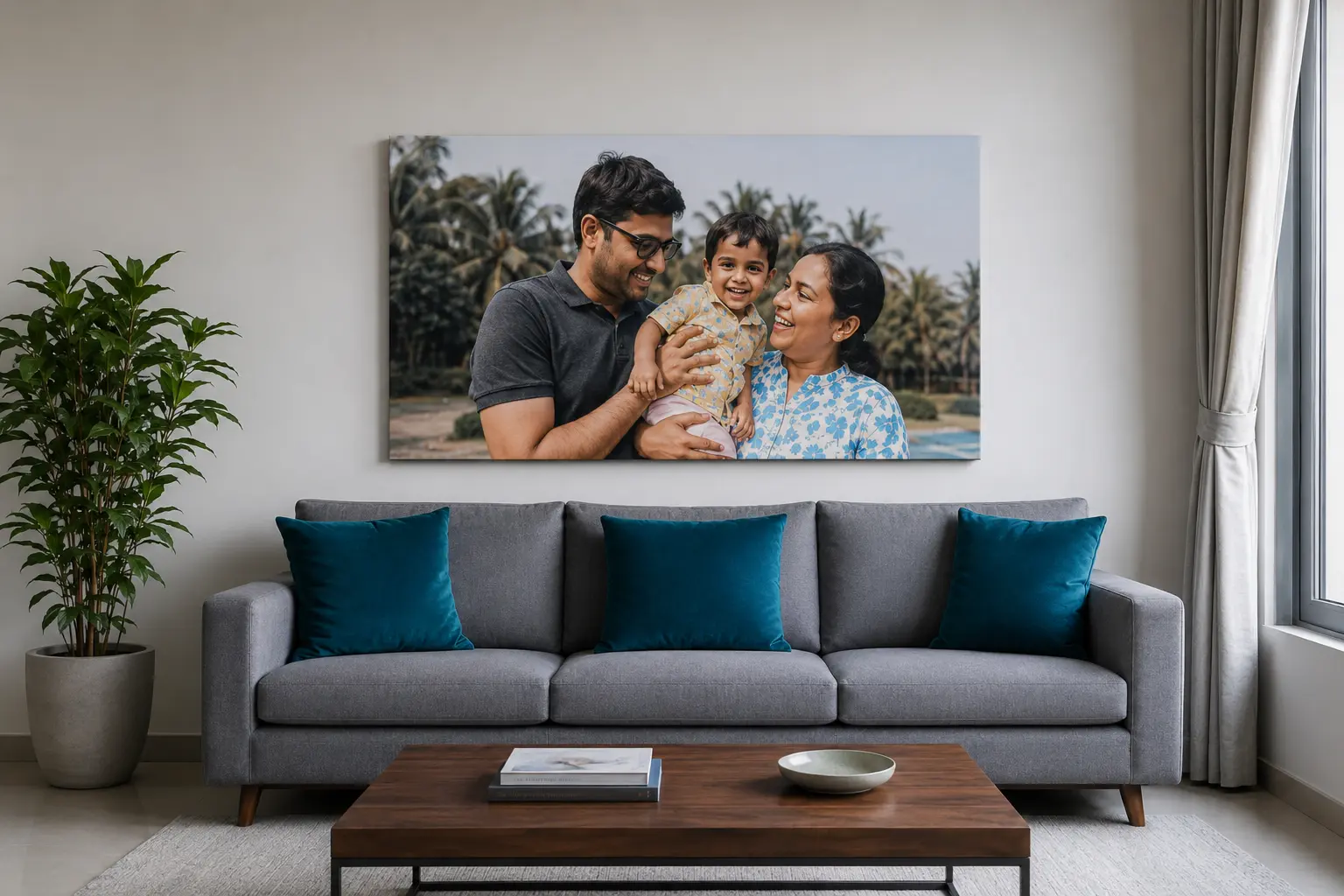
Canvas print sizes in India usually start around 8x8 inches and go up to 24x36 inches or larger, and the right size depends on the wall, not the photo. The short version: small sizes (8x8 to 12x12) work on shelves and narrow walls, medium sizes (12x18 to 18x24) suit bedrooms and hallways, and large formats (20x30 and up) are made for the living room sofa wall. This guide walks you through exactly which size goes where, with the two simple rules designers use.
Common canvas print sizes in India
Most canvas sizes here are quoted in inches, written as width x height. These are the sizes you will see most often:
- Small (8x8, 8x12, 12x12): Desks, bookshelves, bedside tables, narrow strips of wall between doors, or as units in a multi-piece arrangement.
- Medium (12x18, 16x16, 16x24, 18x24): The workhorse range, covering bedroom walls, hallways, study rooms, and the space above consoles or sideboards.
- Large (20x30, 24x30, 24x36): Statement pieces for the living room, above the sofa, or on the main wall facing the entrance.
- Panoramic (roughly 1:3 shapes like 12x36): Wide group photos, wedding stage shots, skylines, and the strip of wall above a bed's headboard or a TV unit.
If you are stuck between two sizes, go bigger. The most common sizing mistake in Indian homes is not an oversized canvas. It is a 12x18 floating alone on a 10-foot wall, looking like a postage stamp.
The viewing distance rule
Before matching sizes to rooms, one rule explains almost everything: people view a print comfortably from a distance of about 1 to 1.5 times its diagonal, a guideline professional printmakers use when sizing exhibition prints. A 16x24 canvas has a diagonal of about 29 inches, so it looks right from roughly 2.5 to 4 feet away, perfect for a hallway you walk through. A 24x36 has a 43-inch diagonal and wants 4 to 6 feet of breathing room, which is exactly what a living room seating arrangement gives it.
Flip the rule around and it becomes a buying tool: stand where people will actually view the wall, measure that distance, and divide by 1.5. That is roughly the diagonal your canvas should have. A bonus of this rule: photos that are slightly soft at phone-screen zoom often look perfectly sharp at a normal wall-viewing distance, which is why photo resolution matters less than you fear for large wall art.
Which size for which wall
The sofa wall (living room)
This is the wall most people are shopping for. Designers follow the two-thirds rule here: artwork above a sofa looks balanced when it spans about two-thirds of the sofa's width. A standard Indian 3-seater is around 72 inches wide, so you want roughly 48 inches of art: either one large landscape canvas (a 36x24 gets close, a 48-inch panoramic nails it) or a set of three 16x24 canvases hung with 2-inch gaps. Leave 6 to 8 inches between the top of the backrest and the bottom of the canvas.
The bedroom
Above the bed, the same two-thirds logic applies to the headboard: a queen bed (60 inches) carries about 40 inches of art comfortably. A single 30x20 landscape canvas, a 12x36 panoramic, or a pair of 16x24 portraits all work. On the wall facing the bed, the one you see first every morning, a single 16x16 or 18x24 of a favourite memory delivers more happiness per rupee than almost any other upgrade a room can get. Keep bedroom sizes a notch smaller than living room sizes; the viewing distances are shorter and the mood is quieter.
Hallways and entryways
Hallways have short viewing distances, often 3 feet or less, so medium sizes shine: 12x18, 16x24, or a row of 12x12 squares marching down the corridor at even spacing. For the entryway wall that guests see first, one 18x24 portrait canvas at eye level is more welcoming than a cluster of small frames.
The staircase
Staircase walls want a diagonal arrangement that follows the climb. The classic approach: three to five canvases of the same size (12x12 or 12x18 work beautifully), with the centre of each canvas stepping up parallel to the handrail. Keep the gaps identical at 3 to 4 inches and the sizes consistent. A staircase is the natural home for a year-by-year family series: one print per year, climbing upward.
Square, portrait, landscape and panoramic
Orientation matters as much as size:
- Square (8x8, 12x12, 16x16): Best for close-up portraits, baby photos, and anything shot for Instagram. Squares are forgiving and stack into grids effortlessly.
- Portrait (12x18, 16x24, 18x24 hung tall): Single-person photos, couple portraits, and narrow walls, like the strip beside a wardrobe or between two windows.
- Landscape (18x12, 24x16, 36x24): Family group shots, travel scenes, and wide walls above sofas and beds.
- Panoramic (12x36 and similar): The full baraat, the entire graduating class, a Himalayan ridgeline. Use above long furniture: beds, TV units, dining tables.
Match the orientation to the photo's natural crop. Forcing a vertical phone photo into a wide landscape canvas means cutting off heads or filling the frame with floor. If your photo and wall disagree, change the size, not the people.
One statement piece versus a multi-piece set
A single large canvas is calm, confident and easiest to get right: the default choice for the sofa wall and above the bed. Multi-piece arrangements earn their place when you have several photos that belong together (a wedding sequence, one photo per child) or a very wide wall that one canvas cannot fill on a budget. Two rules keep sets looking intentional: treat the whole group as one shape and apply the two-thirds rule to its combined width, and keep gaps tight and even at 2 to 3 inches. If a gallery-style mix of frames appeals more than canvas sets, see how the materials compare in our guide to canvas vs framed vs acrylic.
How to measure before you order
Five minutes with a measuring tape removes all the guesswork:
- Measure the wall and the furniture below it. Width of the sofa, bed or console, then take two-thirds of it as your target art width.
- Mock it up. Cut newspaper sheets to the canvas size you are considering, stick them up with painter's tape, and live with them for a day. If the rectangle looks lost, go up a size.
- Get the height right. Galleries hang art so its centre sits at 57 inches from the floor, about 145 cm, average eye level. Above furniture, the 6 to 8 inch clearance rule takes priority.
- Check your photo's crop. A 4:3 phone photo maps naturally onto 12x16, 18x24 and similar sizes; a square crop wants a square canvas.
And one reassurance unique to made-to-order printing: at Picsin every order gets a human preprint check before it goes to print, so if your crop, orientation or resolution has a problem, a real person flags it rather than blindly printing a mistake onto 400 GSM canvas.
Once the size is settled, two more decisions round out the picture: which room and wall it actually suits, covered room by room in our canvas wall art ideas guide, and what that size costs, broken down size by size in our canvas print price guide.
Putting your wall to work
You now know more about canvas sizing than most furniture showrooms. Pick your wall, do the two-thirds maths, and upload the photo. Canvas prints at Picsin start at ₹145, ship across India in 3 to 5 days, and shipping is free on orders over ₹199 (COD available). Start with the canvas creator, or browse more sizing and styling guides on our canvas prints topic page.
Frequently Asked Questions
What is the most popular canvas print size for a living room?
How do I know if my photo is good enough for a large canvas?
Should canvas size be in inches or centimetres?
What height should I hang a canvas print?
Is one big canvas better than several small ones?
People Also Ask
What sizes do canvas prints come in?
What is the two-thirds rule for wall art?
How far away should you view a canvas print?
Which is better for a bedroom: square or rectangular canvas?
Related articles
 Christmas
Christmas and New Year Personalised Photo Gift Guide
Skip the generic hampers this Christmas. Personalised photo gifts turn the year's best moments into presents people actually keep.
Read More Birthday
Birthday Gift for Mom: Useful, Personal and Made from Her Own Photos
Mothers take most of the family photos and appear in the fewest. A collage made only of photos of her is a birthday gift she will not have seen coming.
Read More Birthday
Birthday Gifts for Dad: Photo Gifts He Will Actually Hang
When Papa says he needs nothing, he usually means he wants no more clutter. A framed photo of what he is proudest of goes on the wall and stays there.
Read More
Ready To Print Your Own Photos?
Turn your favourite memories into canvas prints, photo frames and photo collages — printed in India and delivered to your door.
Start Creating