
Canvas Wall Art Ideas for Indian Homes, Room by Room
Canvas wall art works room by room: one large canvas of 30 inches or more as a living room focal point, softer portraits at 16 to 24 inches in bedrooms, and sequences of smaller squares along hallways

The difference between a wall that looks decorated and a wall that looks intentional is rarely the art. It is the size, the placement and whether the picture means anything to the people living there. Canvas wall art solves the third problem by definition, because the art is your own photo. This guide solves the first two, room by room, with the sizes and placement rules that work in real Indian homes, from compact 2BHK apartments to houses with double-height walls.
Everything here applies to any custom canvas print you create from a photo: family portraits, wedding pictures, travel shots, kids growing up, even phone photos, checked by a person before printing so quality surprises get caught early.
The two rules that fix most walls
Before the room-by-room, two rules fix the majority of wall art mistakes.
The two-thirds rule. Art hung above furniture should span roughly two-thirds the width of that furniture. Above a standard 72 inch three-seater sofa, that means around 48 inches of art, one large canvas or a group adding up to it. Undersized art floating over a big sofa is the single most common wall mistake in Indian living rooms, partly because people order the size that feels safe rather than the size the wall needs.
The eye-level rule. The centre of the artwork should sit around 57 to 60 inches from the floor, gallery practice that translates directly to homes. Above furniture, keep a 6 to 8 inch gap between the furniture top and the canvas bottom. Most art in Indian homes hangs too high, a habit inherited from hanging things above cupboards.
Living room: one wall, one statement

The living room wall behind or opposite the sofa is the biggest canvas opportunity in the house. It is viewed from across the room, so it needs scale: 30x30 inches and up for a square, 40x30 or wider for a rectangle. Three photos work best at this scale. A full-family portrait, because the living room is the family's public room. A wedding photo, printed large and treated as art rather than a framed record. Or a single spectacular travel shot, a Ladakh valley or a Kerala backwater, in Gallery Wrap so the image continues around the sides and reads as gallery art.
If one large piece feels like commitment, a grid of four 16x16 squares covers similar wall area with more flexibility, and lets you mix people and places. Keep grid gaps tight and even, 2 to 3 inches, so the group reads as one object. If you are still choosing between a printed photo and decorative painting for this wall, our comparison of canvas prints and paintings for the living room settles it honestly.
Sizing a real living room wall: three ways to hit the number
Take a common scenario: a 2BHK living room with a 6-foot, 72 inch, three-seater sofa against the main wall and a standard 9-foot ceiling. The two-thirds rule points to about 48 inches of art. Three ways to hit that number look completely different once they are on the wall. One 36x36 inch Gallery Wrap canvas, alone, centred on the sofa, reads as a bold single statement. A pair of 24x24 canvases side by side with a 2 inch gap covers similar width with a diptych effect, useful when two photos belong together, a couple shot and a family shot, say. Or a grid of four 16x16 squares, gaps of 2 to 3 inches, spreads the same visual weight across more individual photos. None of the three is more correct than the others. The choice comes down to how many photos deserve the wall, not which option is technically "right".
Bedroom: softer, smaller, personal

Bedroom walls are viewed from two metres, not five, so sizes drop: 16x16 to 24x24 above a side table, up to 30x20 above the headboard. The headboard wall follows the two-thirds rule against the bed width, around 40 inches of art over a queen bed. Content changes too. This is the room for the couple's own photos, an anniversary portrait, the wedding varmala moment, a honeymoon landscape, and for children's early photos in their parents' room. Mounted Canvas suits the bedroom's quieter mood: the white edge frames the memory softly instead of announcing it.
Hallways and staircases: built for sequences

Corridors and stairs are transition spaces, seen in motion, which makes them perfect for sequences rather than single pieces: a child at one, three, five and seven; the same couple across a decade of anniversaries; one city photographed across seasons. Use identical sizes, 10x10 or 12x12 squares, hung in a straight line along a hallway or stepping up parallel to the stair angle, with even spacing. The repetition is the design. This is also the best budget wall in the house: five 10x10 canvases cost less than one statement piece and carry more story. For gallery-style planning across mixed sizes, our gallery wall guide covers layouts that mix canvas and frames.
Kids' rooms: art that grows with them

Kids' walls take energy: bright colours, bold crops, Gallery Wrap edges. First-birthday portraits, milestone collages, a blown-up shot of a drawing they made. Practical notes for this room specifically: hang higher than usual if toddlers grab, and canvas is the right material here anyway, no glass to break, light enough that a fall is a non-event. Sizes of 16x20 to 24x16 fit above study tables and beds. A milestone grid, one photo per year, gets a new square each birthday, which turns the wall into a tradition. Our baby milestone collage ideas post goes deep on the first-year version.
Dining rooms and kitchens: the room everyone forgets
Dining walls get less attention than living rooms, which is exactly why one good canvas there tends to stand out. A dining room is viewed at a fixed, close distance, seated, over a meal, so a single 20x20 to 24x24 canvas on the wall facing the table works better than anything larger. Food photography, a favourite restaurant memory, a fruit or spice market shot from a trip, sits naturally here, and family portraits work too if the room doubles as the everyday eating space rather than a formal one used only for guests. Keep canvas away from the wall directly behind the cooking area. Heat and oil mist travel further in Indian kitchens than most people expect, and a lacquered surface that wipes clean is still better placed a few feet back from the stove than directly above it.
Study and work-from-home corners
The video-call wall earned its place in Indian homes after 2020. A single 16x16 or 18x12 canvas behind your chair reads as intentional on camera without shouting. Travel photos and abstract crops of your own shots work better here than family portraits, which pull attention on calls. This is also the natural home for achievement photos, the convocation, the first office, the marathon finish.
Entryway: the first ten seconds
The wall facing the main door sets the tone of the whole house in ten seconds. One warm family photo at 20x20 to 24x24, or a pair of 12x12s, says everything a nameplate cannot. Avoid clutter here; one strong piece beats five small ones. In apartment entries with narrow walls, a vertical 12x18 or 16x24 uses the proportion the wall actually has.
Matching your canvas to the wall it hangs on
The photo matters more than the wall colour, but the wall colour decides how the canvas reads from across the room. Warm wall tones, common through Indian homes, terracotta, mustard, deep teal, sit well with photos that carry some warmth of their own: golden-hour outdoor shots, warm skin tones, wood and greenery in the frame. Cooler or neutral walls, white, grey, pale sage, let a photo's own colour carry the room, which is why a vivid travel shot or a bright kids' photo often gets chosen for a plain wall rather than a patterned one. One rule holds regardless of colour: a photo with a cluttered or busy background competes with a patterned wall behind it, while a photo with a clean, simple background works on almost any wall. If you are unsure, our 3D and AR preview shows the canvas against your actual wall through your phone, which settles more colour debates than a paint swatch ever will.
Building a wall over time, instead of all at once
Not every wall needs to be finished in one order. A hallway sequence or a gallery grid works especially well bought in stages: one or two canvases now, more added as new photos become worth printing, a child's milestone square added each birthday. The trick to making a phased wall look planned rather than accidental is deciding the grid or sequence rules upfront, same size, same gap, same style, even if only two pieces exist on day one. Mark the full intended layout in pencil or masking tape before hanging the first piece, so canvas six slots into the plan as cleanly as canvas one did.
Common canvas wall art mistakes, and the easy fixes
- Hanging too high. The single most common mistake in Indian homes, inherited from placing art above cupboards. Fix: measure to 57 to 60 inches from the floor, not the ceiling line.
- One small canvas on a big wall. A 12x12 canvas on an 8-foot wall reads as an afterthought. Fix: apply the two-thirds rule against the furniture below, or the wall width if there is no furniture.
- Mixing unrelated sizes on one wall with no plan. Three different sizes scattered with no grid or sequence reads as clutter. Fix: pick one statement piece, a tight equal-size grid, or a deliberate sequence, never a mix of all three at once.
- Choosing the photo last. Buying a size first and hunting for a photo to fill it produces generic-feeling walls. Fix: pick the photo that means something first, then size the canvas to the wall.
- Ignoring the light in the room. A wall that looks fine at 11am can take harsh direct sun by 4pm. Fix: check the wall across a full afternoon before committing a large canvas to it.
Light, walls and the Indian-home practicalities
Three practicalities decide how long wall art stays beautiful in Indian conditions. Avoid walls that take harsh direct afternoon sun; even our fade-resistant pigment inks with a UV-resistant lacquer deserve better than a daily five-hour bake, and any art fades faster in direct sun. Skip walls with known monsoon damp; moisture is a wall problem before it is an art problem. And on concrete and brick walls, standard in Indian construction, hanging is a drill, a wall plug and a screw, a five-minute job; every canvas we ship arrives with the hook already fitted, so one point on the wall is all it needs.
Choosing sizes without guessing

Every size decision above gets easier with the tool built into our canvas pages: tap 3D View and see the exact canvas, your photo, real dimensions, on your own wall in AR through your phone browser. It replaces measuring-tape doubt with a ten-second look, and it is the reason our customers order large sizes with confidence. Match it with the canvas print size guide for the numbers, then create your canvas wall art: made to order on 400 GSM cotton canvas, dispatched in 3 to 5 days, delivered anywhere in India with free shipping over ₹199 and Cash on Delivery. Prices start at ₹145, and 10,392+ customers rate us 4.4 out of 5.
Frequently Asked Questions
What size canvas wall art is best for a living room?
How high should canvas wall art be hung?
Which photos work best as canvas wall art?
Can I put canvas wall art in a bedroom?
How do I know a canvas size will fit my wall?
People Also Ask
Is canvas wall art better than posters for Indian homes?
How many canvases should go on one wall?
What wall art suits a small apartment?
Related articles
 Christmas
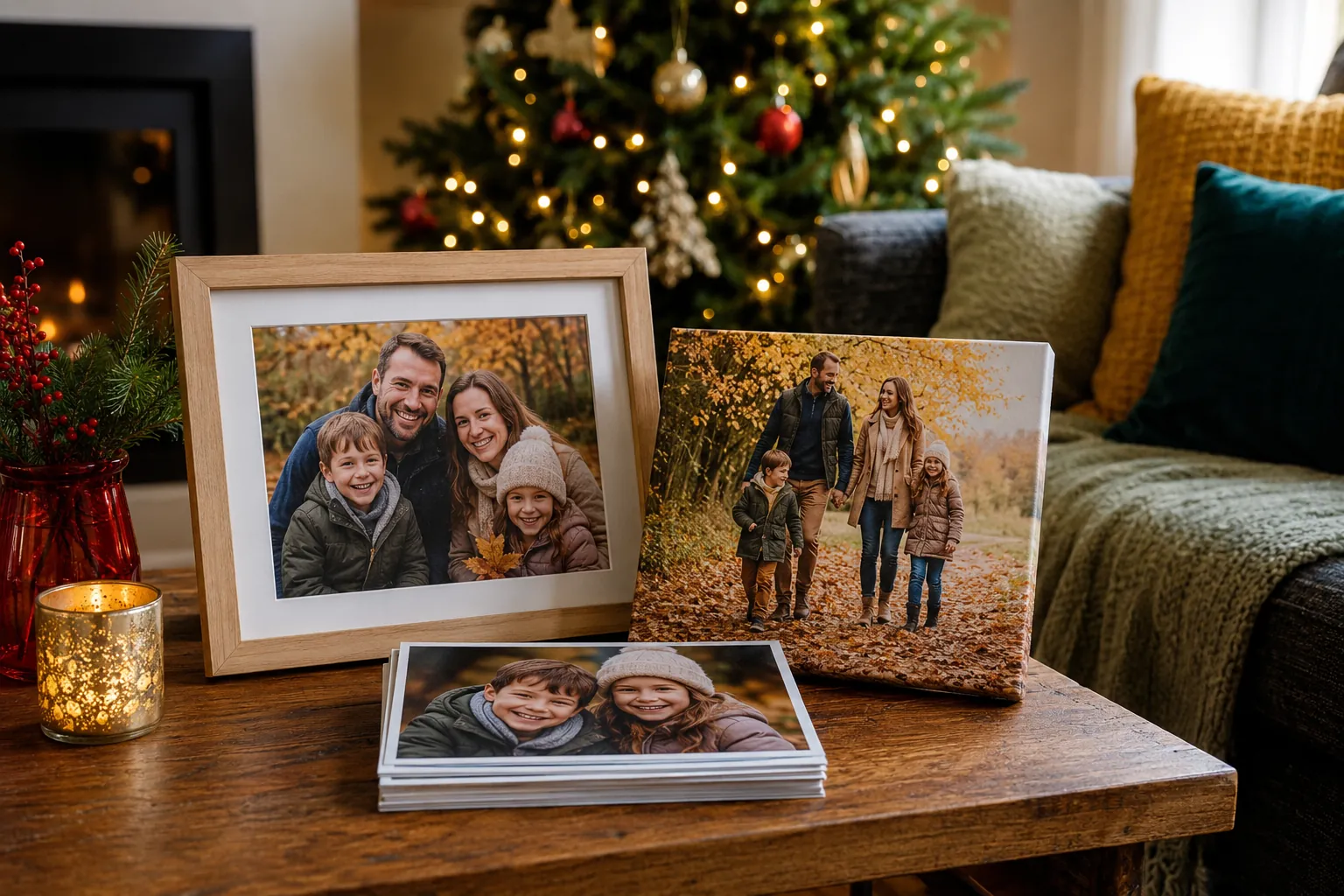
Christmas and New Year Personalised Photo Gift Guide
Skip the generic hampers this Christmas. Personalised photo gifts turn the year's best moments into presents people actually keep.
Read More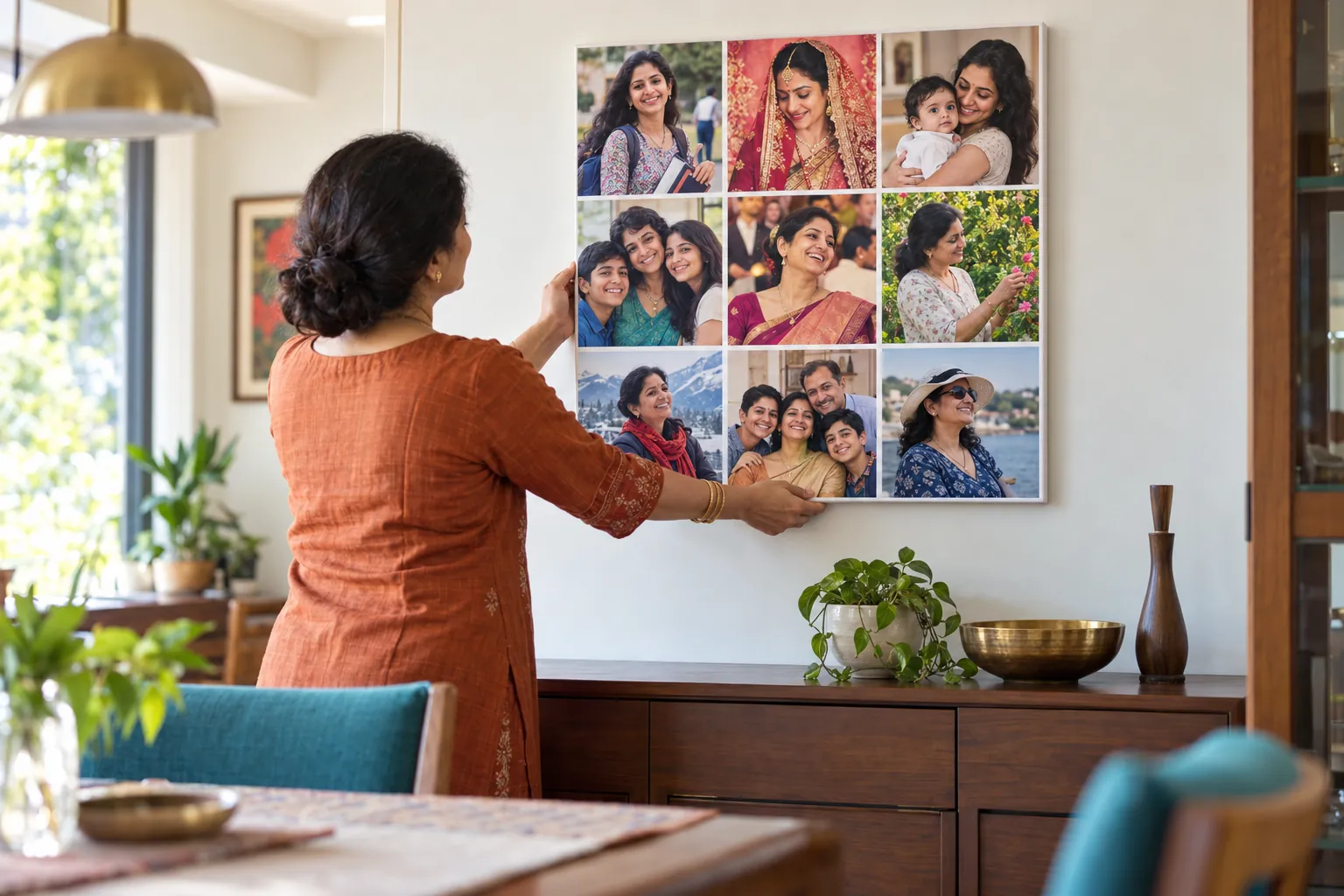 Birthday
Birthday Gift for Mom: Useful, Personal and Made from Her Own Photos
Mothers take most of the family photos and appear in the fewest. A collage made only of photos of her is a birthday gift she will not have seen coming.
Read More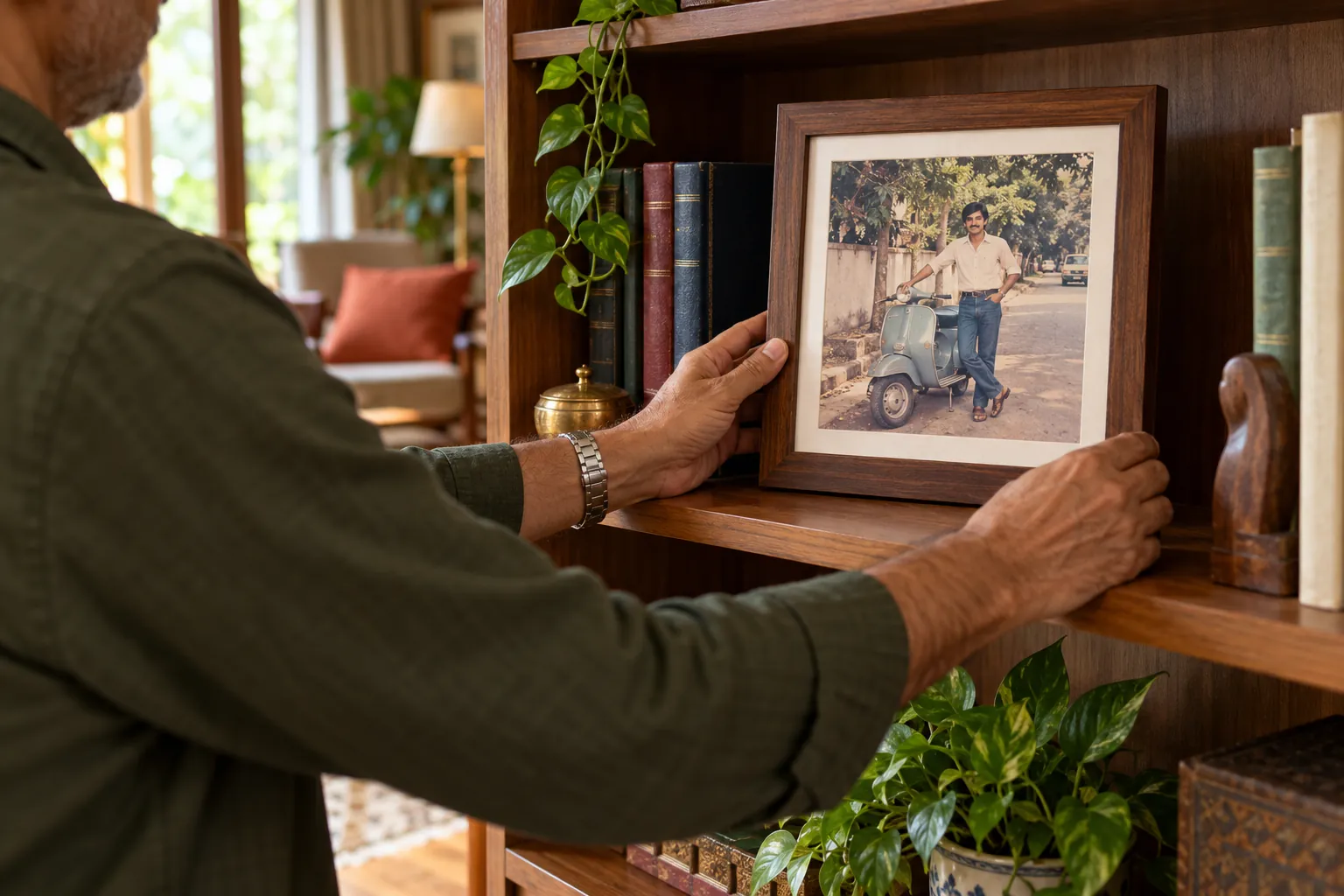 Birthday
Birthday Gifts for Dad: Photo Gifts He Will Actually Hang
When Papa says he needs nothing, he usually means he wants no more clutter. A framed photo of what he is proudest of goes on the wall and stays there.
Read More
Ready To Print Your Own Photos?
Turn your favourite memories into canvas prints, photo frames and photo collages — printed in India and delivered to your door.
Start Creating