
Canvas vs Framed vs Acrylic Prints: An Honest Comparison
Texture, glare, weight, durability, rooms and price: a straight comparison of the three big photo print formats, including the one we don't sell.
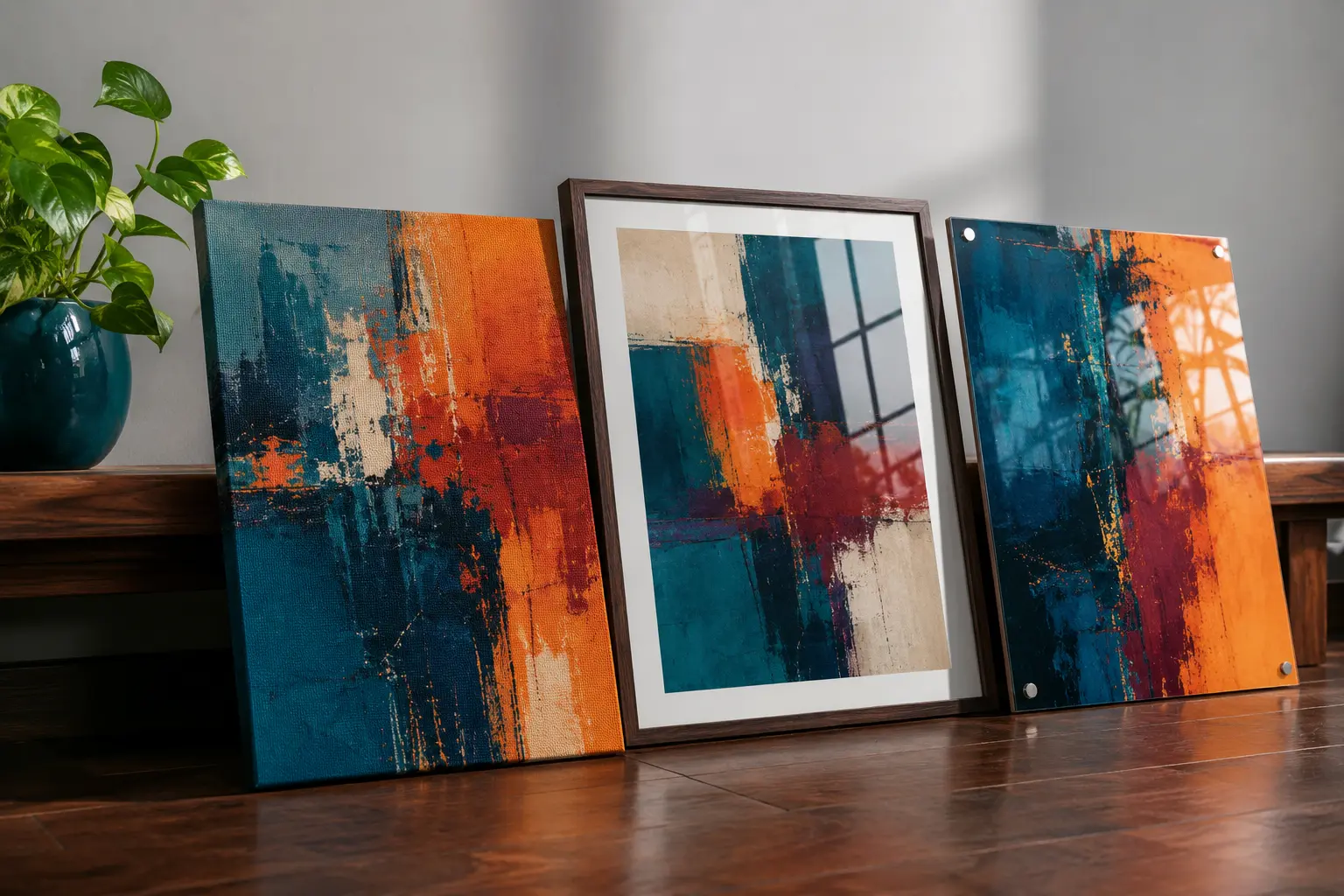
Choosing between canvas vs framed prints, with acrylic hovering as the glossy third option, comes down to five things: texture, glare, weight, durability and budget. The short answer: canvas gives you a warm, matte, painting-like surface with no reflections and the friendliest price; framed gives you formal polish behind glass; acrylic gives you a sleek modern shine at a premium. Here is the honest, point-by-point version.
The three formats in thirty seconds
- Canvas print: your photo printed directly on woven canvas fabric and stretched over a wooden frame at the back. No glass, no border unless you add one. Picsin prints on 400 GSM canvas.
- Framed print: your photo printed on paper, placed behind glass inside a moulded frame, often with a mount or matte border. The classic, formal look.
- Acrylic print: your photo printed behind (or mounted under) a sheet of clear acrylic plastic, giving a glossy, slightly three-dimensional, gallery-modern effect.
One thing to know upfront, in the spirit of honesty: Picsin sells canvas prints and framed pictures, not acrylic. We will still give acrylic its due below. It earns its place in some homes, but we will also tell you exactly where canvas and framed quietly beat it.
Look and texture: painting vs photograph vs glass slab
Canvas reads as art. The woven texture softens fine detail very slightly and gives photos a painted, organic warmth, which is why portraits, wedding photos, baby photos and travel shots look so natural on it. It suits Indian interiors that lean warm: wooden furniture, earthy walls, brass accents.
A framed print reads as a photograph, presented. The paper stays perfectly crisp behind glass, the mount adds breathing space, and the frame itself contributes to the décor. If the photo is formal, a wedding portrait, graduation, or an heirloom black-and-white, framing signals that formality.
Acrylic reads as display. Colours appear saturated and luminous because light passes through the glossy acrylic layer. It is striking with high-contrast, vivid images: neon cityscapes, deep blue oceans. It suits minimalist, contemporary interiors. With soft family photos, though, the glossy slab effect can feel a touch showroom-like where canvas feels like home.
Glare: the factor most people forget
Indian homes are bright. Big windows, tube lights, festive lighting half the year, and every glossy or glass surface reflects all of it.
This is canvas's quiet superpower: with no glass or gloss layer, there is simply nothing to create glare. You can hang a canvas opposite a window and see the photo clearly all day.
Glass and acrylic both reflect. Conservation professionals deal with this constantly. Framing conservators point out that standard sheet plastics like acrylic are not coated to reduce glare at all, and that reducing reflections otherwise means adjusting your lighting or paying for specially coated glass. In a normal home, the practical translation is: hang framed or acrylic pieces on walls that face away from windows and bright lamps, or accept some reflection. With canvas, you skip the problem entirely.
Weight and wall safety
Canvas is the lightest of the three by a wide margin. Fabric stretched on a wooden frame weighs little, hangs off a single nail, and is safe even on slightly crumbly plaster walls (every Indian renter knows the wall we mean).
Framed prints are heavier because of the glass and moulding. The same CCI guidance notes that glass is heavier than plastic and that large glazed pieces need sturdy frames and adequate hanging systems. In home terms, use a proper wall plug and hook for anything framed beyond a small size, especially above seating or a bed.
Acrylic sits in between: lighter than glass at the same size, but the mounting hardware (often standoff bolts) demands careful, level drilling. It is also the least forgiving format to transport, which matters when you are couriering a gift across India.
Durability and everyday care
- Canvas: no glass to crack in transit or in an enthusiastic game of indoor cricket. Dust it with a dry cloth. The 400 GSM fabric Picsin uses is thick and dimensionally stable. Keep it away from direct splashes and harsh direct sunlight, as with any print.
- Framed: the glass protects the paper from dust, moisture and curious fingers: the most protective format for the print itself. The trade-off is that glass can break if the piece falls or ships badly, so packing quality matters.
- Acrylic: here is the honest fine print. Acrylic scratches more easily than glass and builds up static charge that attracts dust, both well-documented properties of plastic glazing, per the same conservation literature. It also loves fingerprints. It stays gorgeous if you clean it gently with the right cloth; it stops being gorgeous the day someone wipes it with a rough kitchen duster.
Which rooms suit which format
- Living room: canvas for warmth and zero glare under festive lighting; framed for a formal sofa wall arrangement. Both, mixed, make the best gallery walls, hung with the centre of the arrangement at about eye level, as Houzz's art-hanging guide recommends.
- Bedroom: canvas, almost every time: soft texture, no lamp reflections at night, and light enough to hang above the headboard safely.
- Hallway and stairs: framed prints in matching frames create the classic "family corridor"; canvas works for fewer, larger statements.
- Office or study: framed reads professional. Certificates and formal portraits belong behind glass.
- Bright, sunlit rooms: canvas, because glass and acrylic will mirror the windows.
- Sleek modern apartments: this is acrylic's home turf. If your interior is all clean lines, glass and monochrome, an acrylic piece fits the language.
Size matters as much as format; our canvas size guide covers what works above sofas, beds and consoles.
Price in India: the value equation
Canvas is the clear value winner. At Picsin, canvas prints start at ₹145, which makes experimenting low risk: a small canvas for the bookshelf, a trio for the hallway. Framed pictures start at ₹1,022, reflecting the real cost of moulding, mount and glass; you are paying for presentation, and for formal photos it is worth it. Acrylic, across the Indian market, typically sits at the premium end. For the same size you will generally pay more than canvas or standard framing, before factoring in the more delicate shipping.
Whatever you choose at Picsin, free shipping applies on orders over ₹199, COD is available, and orders ship in 3 to 5 days across India.
Gifting: the format that travels best
For gifting, canvas wins on practicality: light, glass-free, hard to damage in transit, and affordable enough to gift generously. Framed pictures make weightier statement gifts for milestone occasions: anniversaries, retirements, weddings (our anniversary photo gift guide has ideas). Acrylic is a risky courier passenger; if you gift one, hand-deliver it.
The honest verdict
If you love the glossy, modern acrylic look and your décor matches it, acrylic is a legitimate choice. We would rather say that plainly than pretend otherwise. But for most Indian homes, most photos and most budgets, the practical winners are the two classics: canvas when you want warmth, zero glare, light weight and value; framed when you want formality, protection and presence. Every Picsin order, either format, gets a human preprint check before printing, and 10,392+ customers have rated us 4.4 stars on average. For the full material story behind our canvas, from fabric weight to ink chemistry, see what a canvas print is made of, and if you are wondering whether a canvas can sit inside a wooden border like a framed picture, our guide to framed canvas prints and floater frames has the honest answer. For more format guides, browse our canvas print guides.
Choosing your format
Pick your format and go: create a canvas print from ₹145 for warm, glare-free walls, or create a framed picture from ₹1,022 for the formal moments. Upload a photo (HEIC, JPG or PNG), preview it on your wall size, and a real person checks it before it prints. Free shipping over ₹199, COD, and delivery in 3 to 5 days anywhere in India.
Frequently Asked Questions
Which is better, canvas or framed prints?
Do acrylic prints look better than canvas?
Is glare really a problem with framed photos?
Which print format is safest to courier as a gift?
How long do canvas prints last?
People Also Ask
What is the difference between canvas and acrylic prints?
Do canvas prints look cheap?
Should photos be framed behind glass?
Related articles
 Christmas
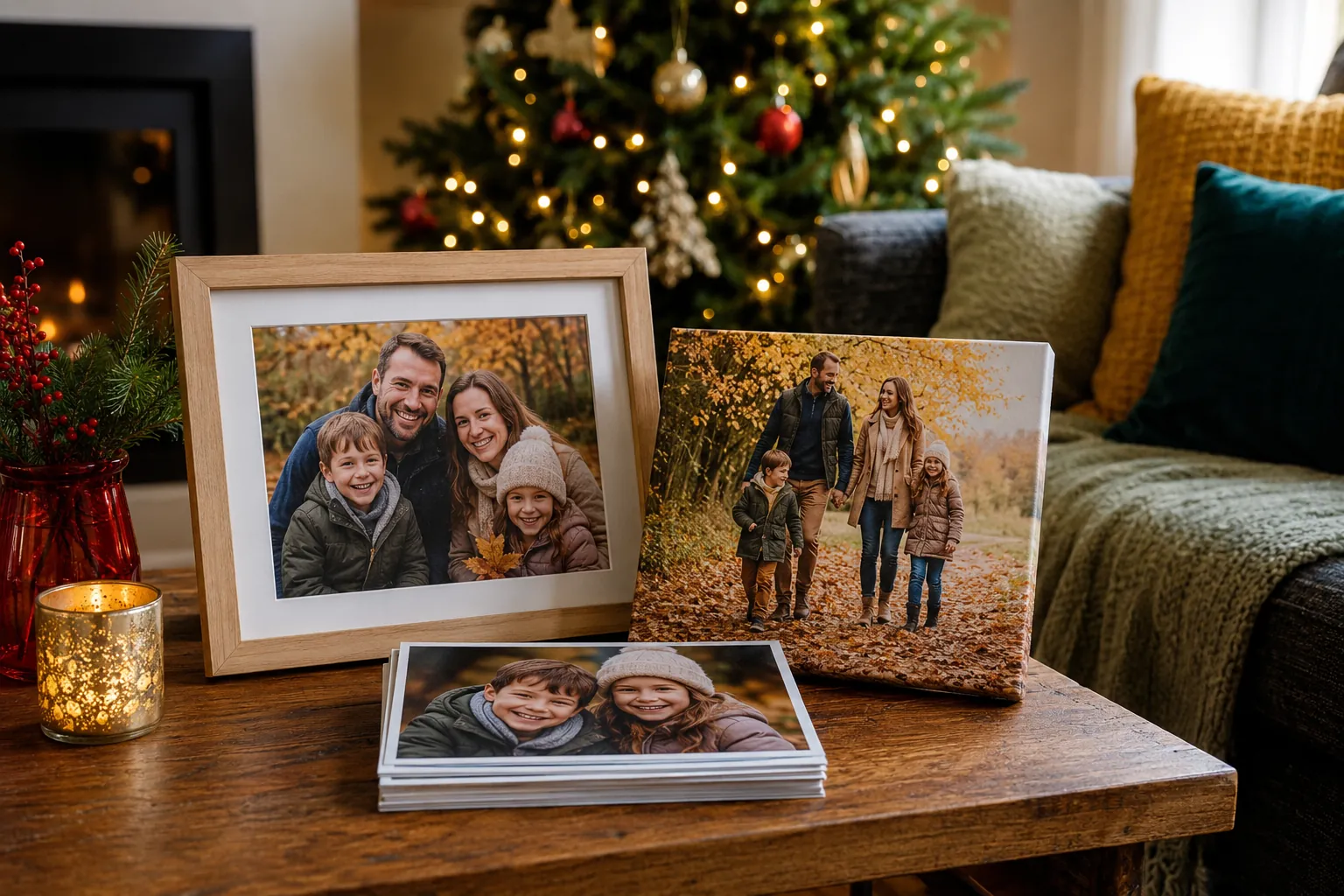
Christmas and New Year Personalised Photo Gift Guide
Skip the generic hampers this Christmas. Personalised photo gifts turn the year's best moments into presents people actually keep.
Read More Photo Frames
Family Photo Frame Ideas: Sizes, Layouts and Where to Hang
A family photo frame works when every face is easy to see from across the room. That depends on the photo, a size matched to the number of people, and the right wall.
Read More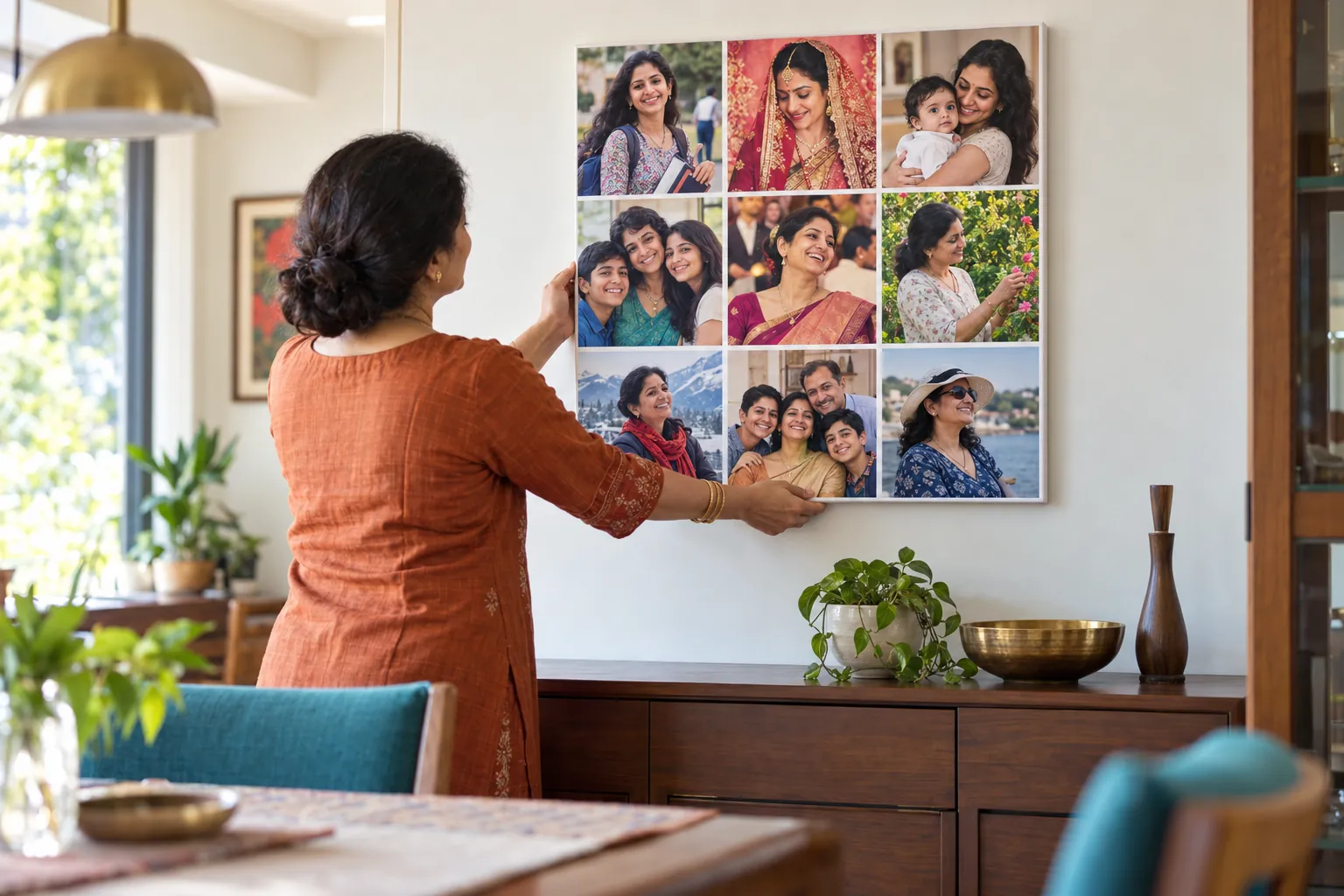 Birthday
Birthday Gift for Mom: Useful, Personal and Made from Her Own Photos
Mothers take most of the family photos and appear in the fewest. A collage made only of photos of her is a birthday gift she will not have seen coming.
Read More
Ready To Print Your Own Photos?
Turn your favourite memories into canvas prints, photo frames and photo collages — printed in India and delivered to your door.
Start Creating